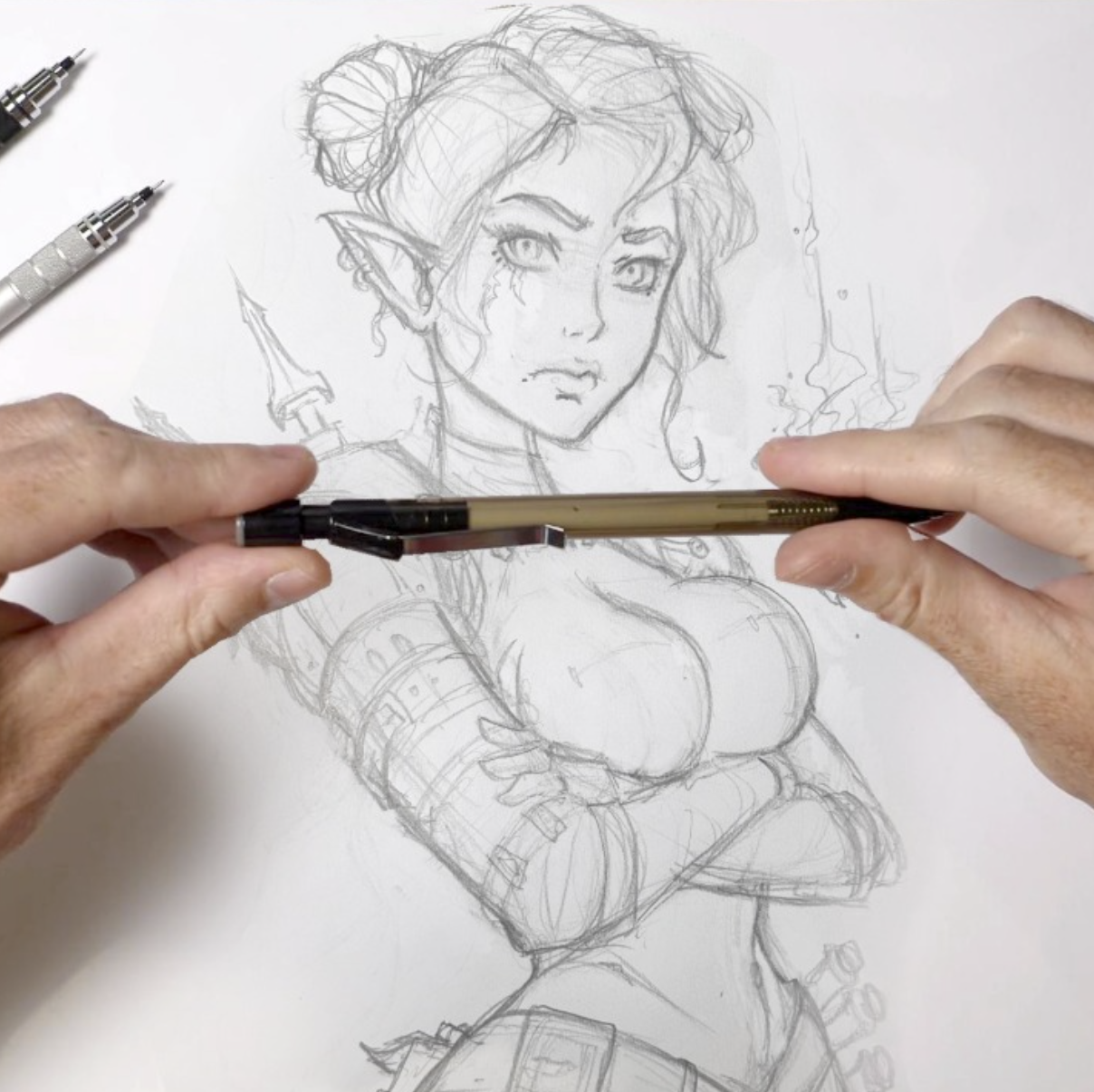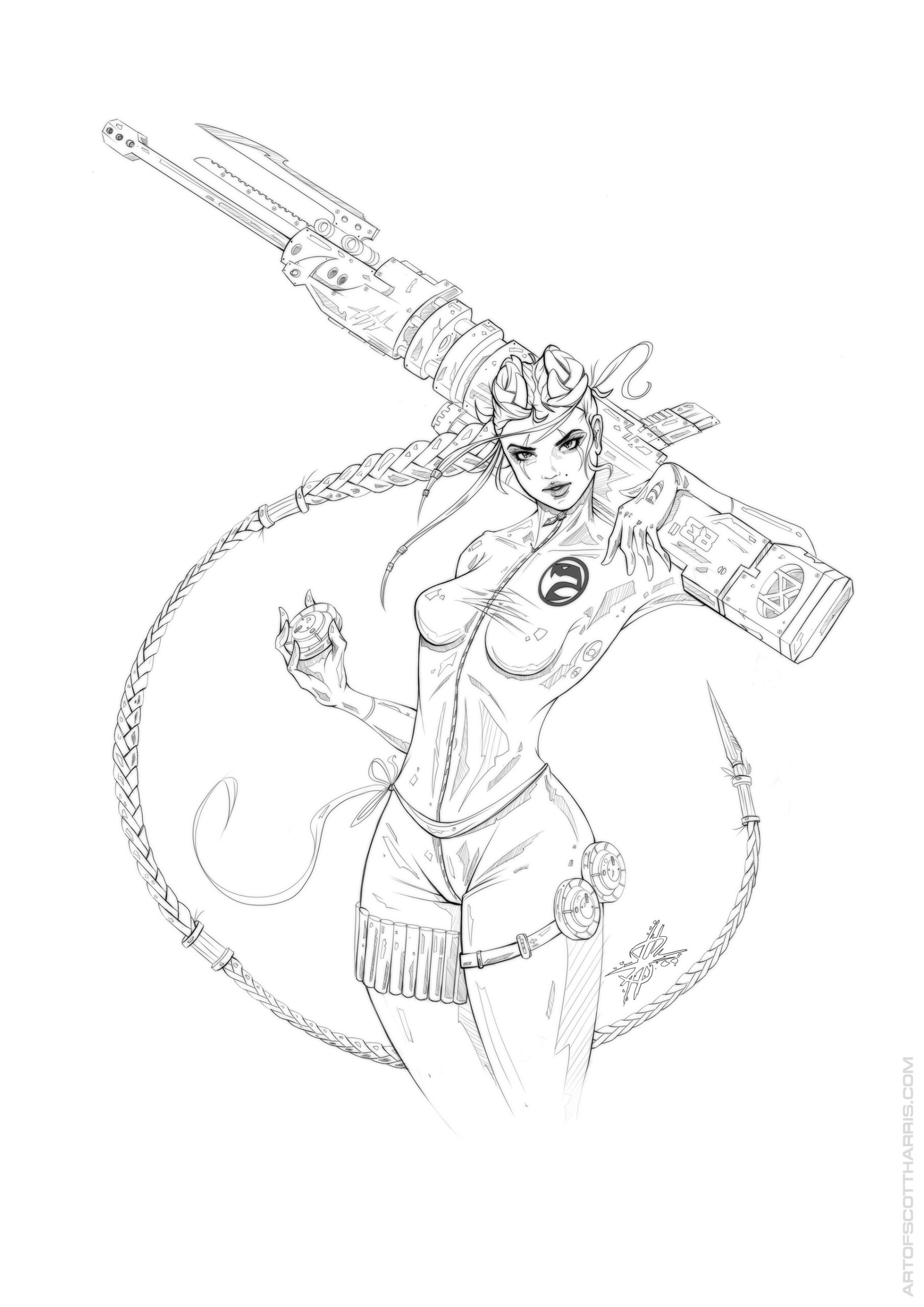
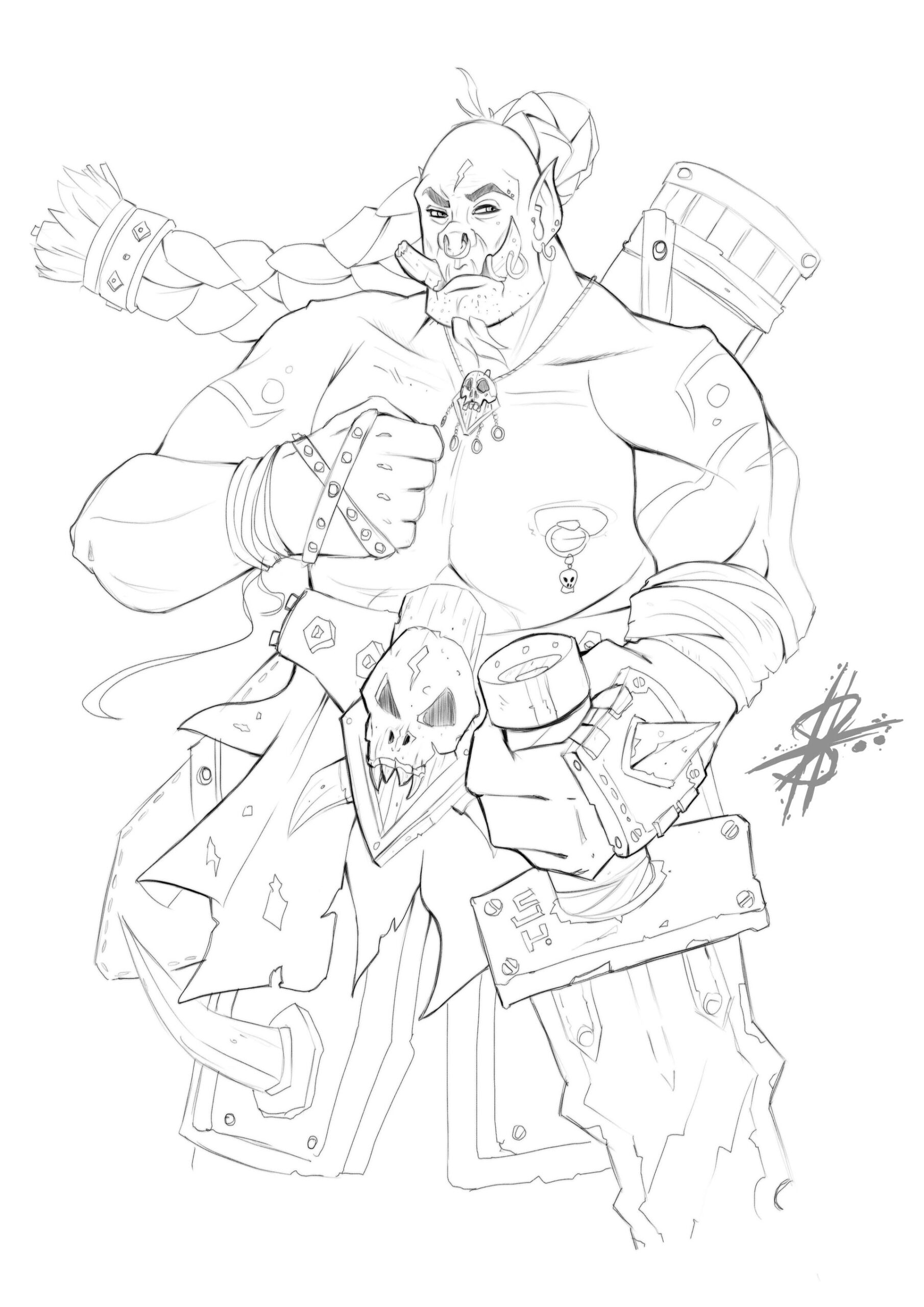
Gesture is the first thing taught in almost every figure class, and the first thing most artists quietly give up on. You fill a sketchbook with thirty-second scribbles, nothing improves, and you conclude that gesture is a warm-up ritual rather than a skill. It isn’t. It is the single decision that determines whether a drawing reads from across the room.
Gesture is not loose lines. It is the action.
The common misreading is that gesture means “draw fast and messy”. Speed is a side effect, not the point. Gesture is the answer to one question: what is this figure doing? Not what shape is the arm, not where does the elbow sit — what is the action, and where in the body does it come from.
A figure reaching upward is not a torso plus two arms. It is a single stretch running from the back foot, through the hip, up the spine, and out through the fingertips. Draw that line and the pose exists. Draw the arm first and you will spend the next twenty minutes trying to rescue a figure that never had a direction to begin with.
This is why gesture comes before construction and not after it. Construction — ribcage, pelvis, limbs as cylinders — is how you make the action solid. It is not how you find the action. Artists who construct first almost always end up with a technically correct figure standing at attention, doing nothing.
The line of action, and why one is enough
Start every figure with a single line. One. It runs the length of the pose and carries the whole story: a C-curve for a figure leaning, an S-curve for a figure twisting, a straight diagonal for a figure driving forward.
The discipline is in refusing to draw a second line until the first one is right. If you cannot describe the pose with one stroke, you have not understood it yet, and no amount of anatomy will hide that. Look again. Say the action out loud — “he is pushing”, “she is falling away from something” — and draw that sentence.
Two mistakes account for most weak lines of action:
- Drawing the outline instead of the movement. The contour of a body is not the same thing as its direction. Your line of action often runs through the figure, not along its edge.
- Hedging. A tentative, sketchy line of action produces a tentative pose. Commit to one confident stroke. If it is wrong, draw another confident stroke — do not feather twelve nervous ones into an average.
Straights against curves
Once the action is down, the figure gets its energy from contrast. A limb that curves on one side should be relatively straight on the other. A shoulder line that tilts one way sets up a hip line that tilts the other.
This is not a stylistic flourish — it is how bodies actually work. Muscles contract on one side of a joint and stretch on the other, so a live pose is almost never symmetrical. When both sides of a limb curve equally, the arm reads as a sausage. When both shoulders and both hips sit level, the figure reads as a mannequin.
So: look for the tilt. Shoulders tilt one way, hips the other, head counters both. Find those three angles in the first ten seconds and the pose already has life in it before a single edge is defined.
How to practise it so that it actually sticks
Timed gesture practice works, but only if the time limit is doing something. Most people run thirty-second sessions and use all thirty seconds drawing the same information they would have drawn in five minutes, just worse.
Use the clock to force a specific decision instead:
- 10 seconds — line of action only. One stroke per pose. Twenty poses. You are not drawing a figure, you are practising reading an action. This is the drill that moves the needle, and it is the one everybody skips.
- 30 seconds — action plus the three tilts. Line of action, shoulder line, hip line, head angle. Still no contour, no hands, no face.
- 2 minutes — add mass. Now the ribcage and pelvis go on as simple solids, hung on the line you already have.
- 5 minutes — one long pose. Push through to limbs and weight. This is where you find out whether the gesture underneath was strong enough to build on.
Twenty minutes structured like that will teach you more than two hours of undirected sketching, because each stage has exactly one thing it can go wrong at.
The test that tells you whether it worked
Put the drawing down, walk to the other side of the room, and look at it. If you can still tell what the figure is doing, the gesture is working. If it becomes a blob of marks that could be anyone standing anywhere, no amount of rendering will save it.
The same test applies to finished work. A professional character illustration is legible at thumbnail size, and it is legible because the gesture underneath was decided before anything else was.
Where this fits in the larger picture
Gesture is one of ten modules in Character Art School: Complete Character Drawing, and it sits deliberately before the modules on proportion, workflow and finishing — because everything after it is built on the action you found first. If your figures feel stiff no matter how carefully you construct them, gesture is almost certainly where the problem started.
Two related pieces worth reading next: why drawings look flat, and how to fix it, which deals with depth rather than movement, and a repeatable method for head proportions, which is the construction side of the same coin.