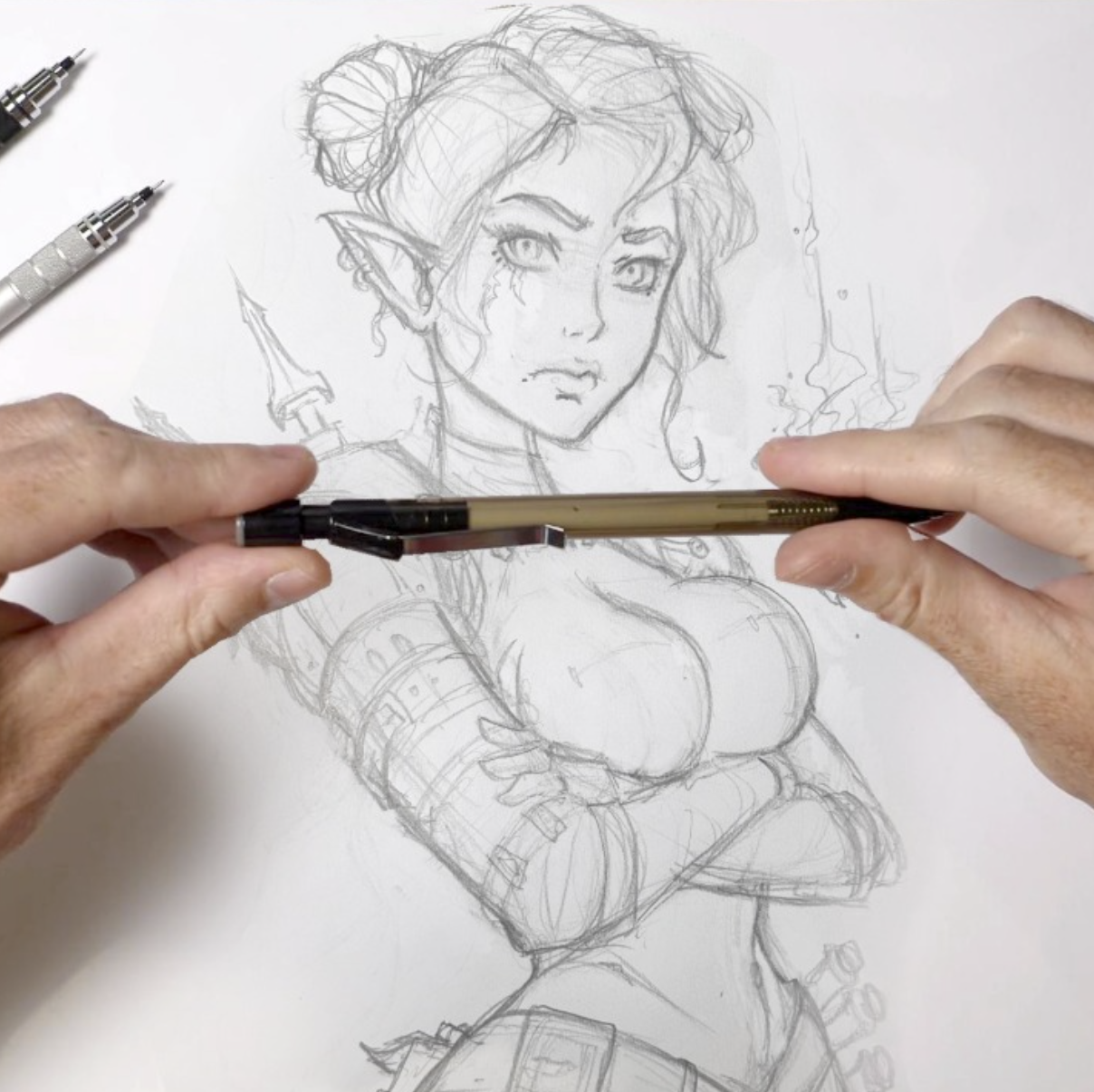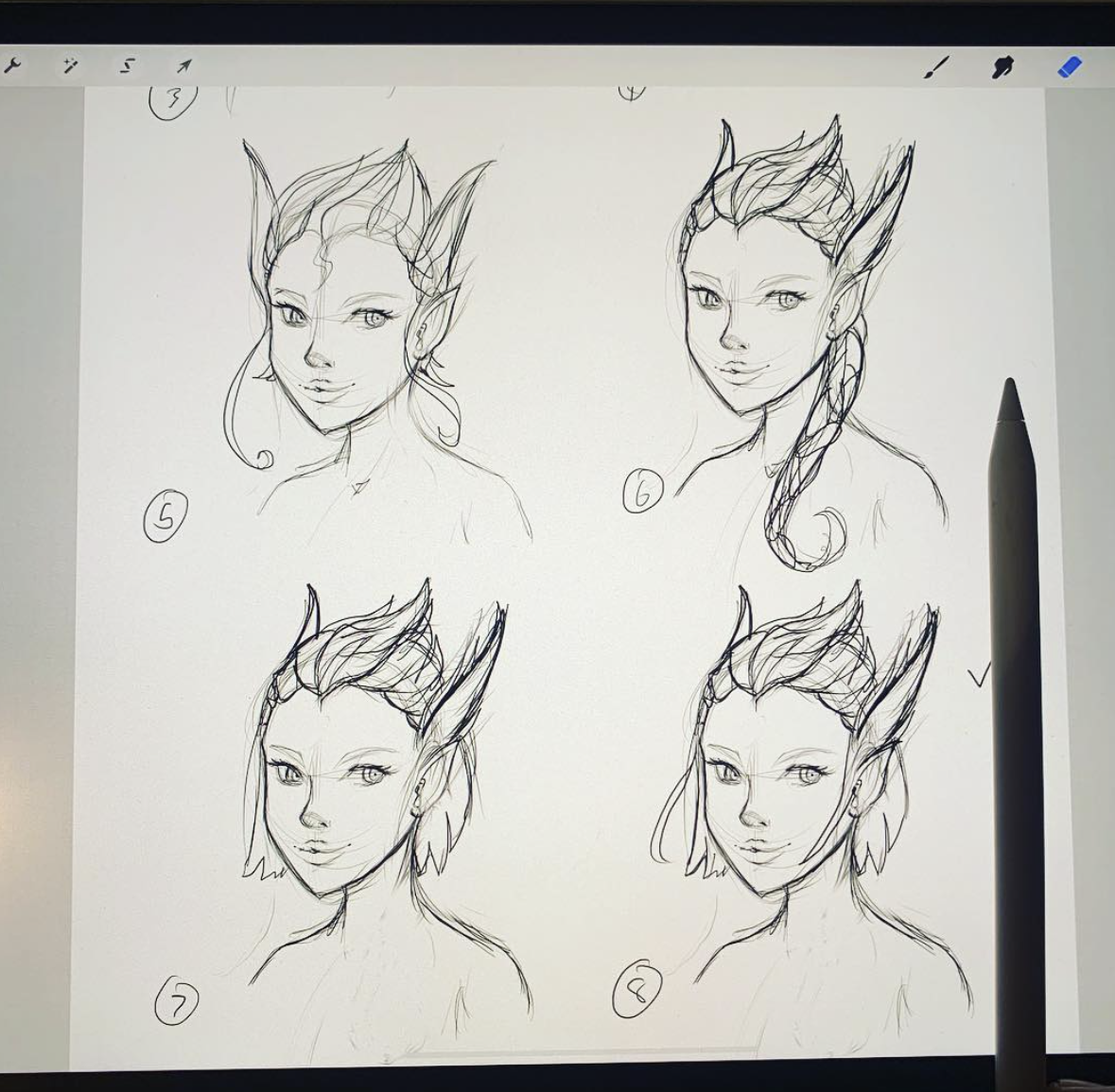
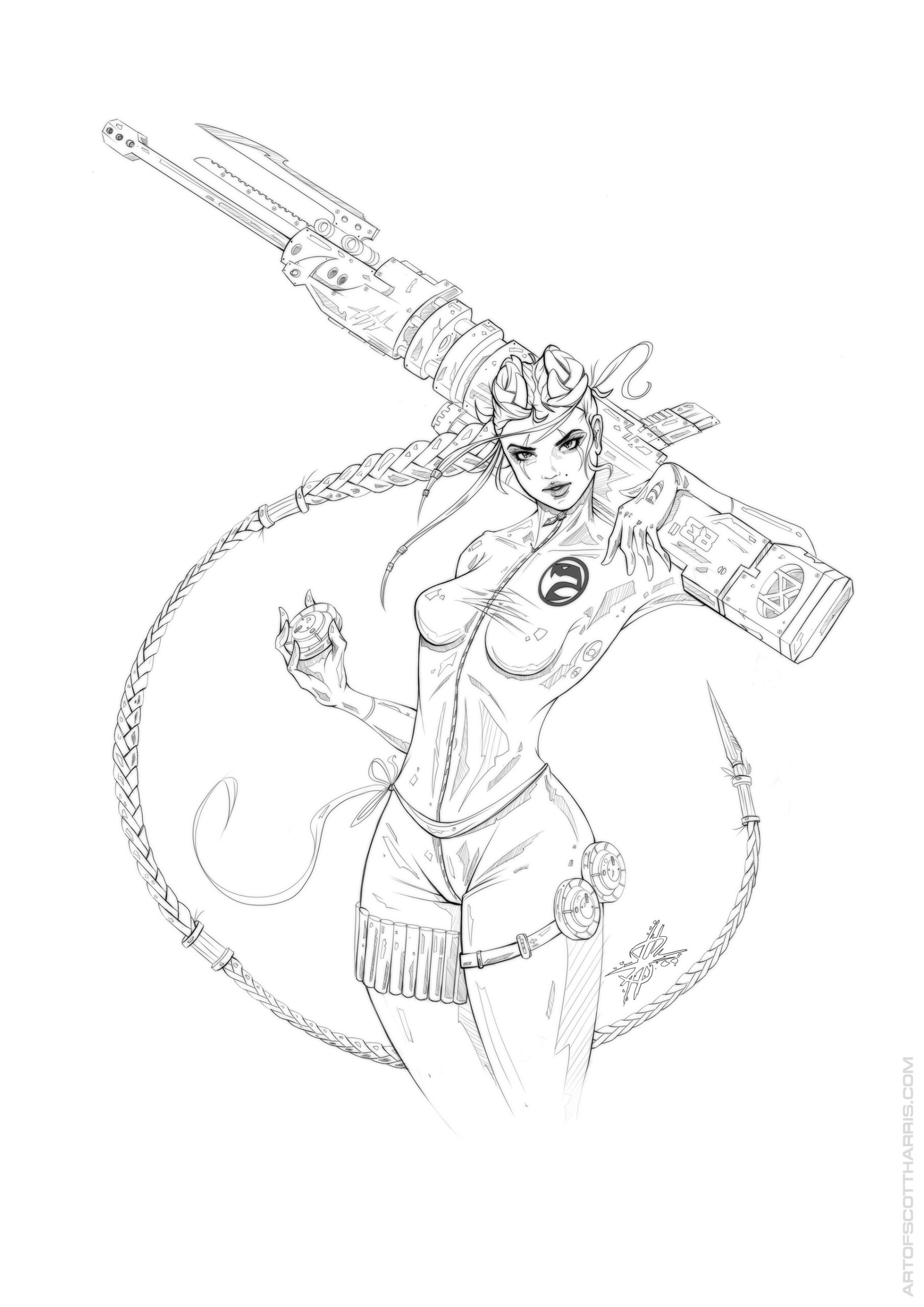
You draw something, it is accurate, the proportions check out — and it still sits on the paper like a sticker. Nothing is technically wrong and nothing feels solid. That is a depth problem, and depth is not a rendering problem. You do not fix it with more shading. You fix it before the first line goes down.
You are drawing shapes when you should be drawing forms
A shape is flat: a circle, an oval, an outline. A form has a far side. The difference in practice is whether, while you are drawing the arm, you are aware of the part of the arm you cannot see.
This sounds abstract until you test it. Draw a cylinder. Now draw the ellipse at the far end — the one hidden behind the near end. If you cannot place it confidently, you are drawing a rectangle with rounded corners, and every limb you draw for the rest of your life will read as one.
The habit to build: for every form you draw, draw the hidden contour first, at least mentally. The torso has a back. The head has a skull behind the face. The hand has a palm on the other side of the fingers. Artists who draw in 3D are not doing something mystical; they are simply keeping track of the parts they are not looking at.
Overlap does more work than shading ever will
The strongest depth cue available to a line drawing is overlap: one form passing in front of another. It costs nothing, it works in pure line, and it works at thumbnail size.
This is why a figure standing with arms at its sides reads flat, and the same figure with one arm crossing the torso reads deep. Nothing changed except that one form now demonstrably sits in front of another.
So when a drawing feels flat, before you reach for a brush, ask what could overlap. Turn a shoulder toward the viewer. Bring one leg forward. Let the hair cross the jaw. Every overlap you introduce is one more statement about which thing is nearer, and depth is nothing more than an accumulation of those statements.
Line weight is a depth tool, not a decoration
Most beginners draw with one line weight because they are drawing with one pen setting. Vary it and the same drawing gains inches of depth:
- Heavier lines come forward. Thicken the contours of near forms and the edges where forms overlap.
- Lighter lines recede. Thin out distant edges and interior detail.
- Heavier in shadow, lighter in light. A line that thickens as it turns under a form does the work of shading without any shading.
The rule of thumb: if every line in your drawing is the same weight, you have told the viewer that everything is the same distance away — which is exactly the flat feeling you are trying to get rid of.
Foreshortening is not an advanced topic
Foreshortening gets treated as something to attempt after five years. It is actually the most direct way to force yourself into three dimensions, because it is impossible to fake with an outline.
The working method is simple: draw the forms as a stack of solids and let the near ones get bigger and the far ones smaller and rounder. An arm pointing at the viewer is a series of cylinders whose ellipses open up as they come toward you. You are not drawing an arm; you are drawing a sequence of cross-sections in space, and the arm appears.
Practise on the least glamorous thing available — your own forearm, held out toward a mirror. Ten of those will teach you more about depth than a month of three-quarter portraits.
Asymmetry, again
Symmetry flattens. A perfectly frontal, perfectly balanced figure has no near side and no far side, so there is nothing for depth to happen between. Rotate the ribcage slightly against the pelvis, drop one shoulder, turn the head a few degrees, and suddenly there are near forms and far forms and the drawing has a third dimension to describe.
This is the same principle that makes gesture work, applied to volume rather than movement. It is not a coincidence that the two problems have the same solution.
The checklist
When a drawing looks flat, run through this before touching the shading:
- Can I draw the hidden contour of every major form?
- Is anything overlapping anything? Could more?
- Does the line weight change anywhere?
- Is the pose symmetrical? Can I rotate something?
- Are the near forms actually bigger than the far ones?
In practice, one or two of those will be the whole answer.
Going further
Drawing in 3D, depth, asymmetry and line weight are the four lessons of Module 2 in Character Art School: Complete Character Drawing, and they come before figure proportion for exactly the reason above: a correctly measured flat drawing is still a flat drawing.
If your depth problems are environmental rather than anatomical — rooms that lean, backgrounds that fight the character — that is a perspective problem, and Perspective Art School is the course for it.